
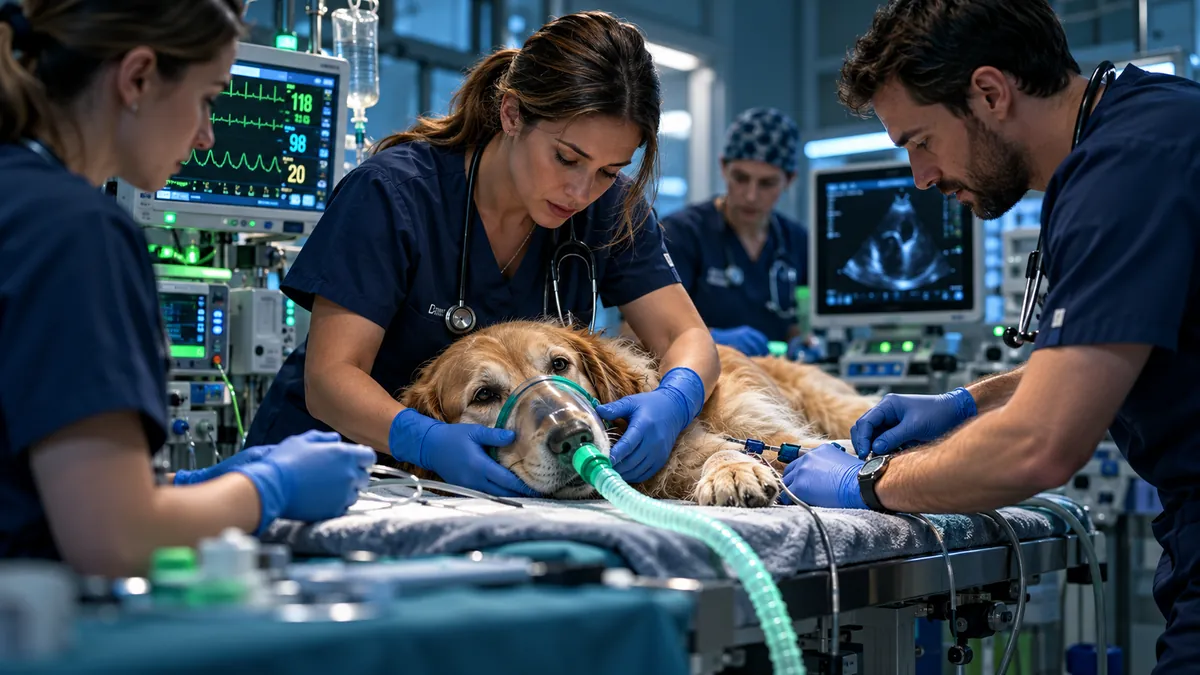
Eight weekend modules of hands-on training in the rapid assessment, stabilization, and management of critically ill dogs and cats.
The Advanced Continuing Education Program in Small Animal Emergency and Critical Care is designed for veterinarians seeking to develop advanced knowledge, refine practical skills, and build confidence in the rapid assessment, stabilization, and management of critically ill dogs and cats.
The program provides a comprehensive approach to emergency medicine and intensive care, covering triage, initial assessment, patient stabilization, diagnostic decision-making, vascular access, patient monitoring, and advanced critical care. Participants will develop the clinical reasoning and technical skills necessary to make timely, accurate decisions in high-pressure situations where every intervention matters.
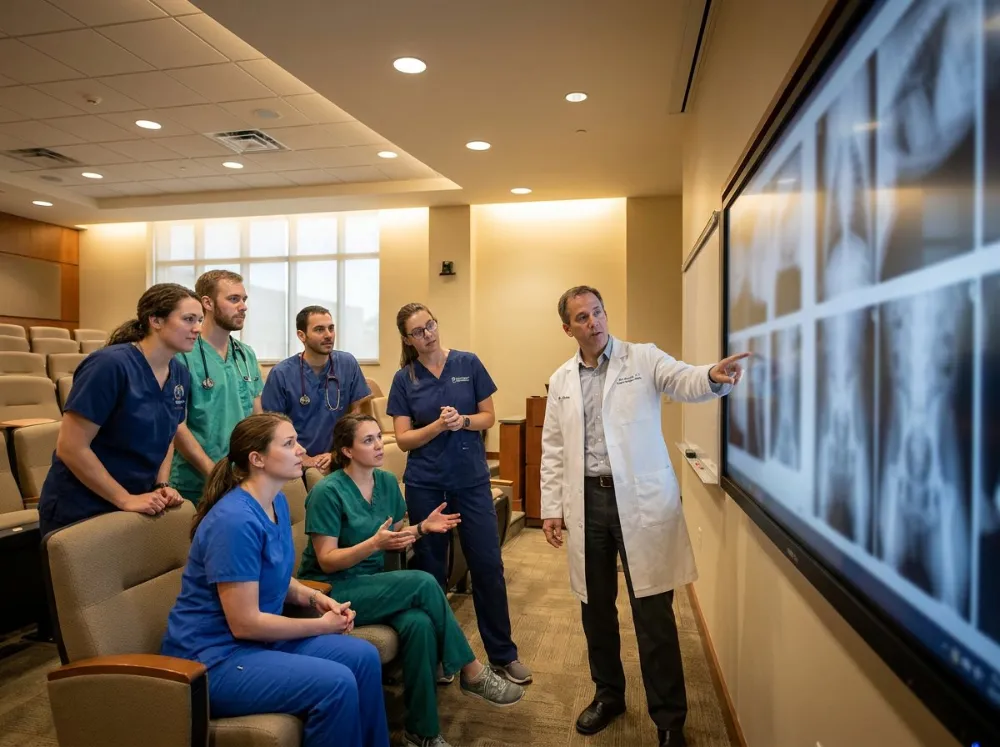
Clinical case discussions, problem-solving exercises and realistic emergency scenarios.
Simulation-based training in CPR techniques, team coordination and resuscitation algorithms.
Thoracocentesis, pericardiocentesis, thoracic drains, catheters and more, practiced on cadavers or simulation models.
One weekend a month, from foundations to advanced critical care management.
Each two-day module pairs focused theory with practical training — and each one builds on the last. 2027 dates to be announced.

Critical Care Physiology, Triage, Initial Stabilization, Patient Monitoring, FAST Ultrasound (AFAST/TFAST), and Initial Diagnostic Approach
Shock Recognition and Management, Hemodynamic Assessment, Fluid Therapy, Vasoactive and Inotropic Drugs, Acid–Base Disorders, and Electrolyte Imbalances
Mechanical Ventilation, Oxygen Therapy, Anesthesia and Sedation of Critically Ill Patients, Airway Management, and Respiratory Support Strategies
Critical Care Cardiology and Pulmonology, Sepsis and Septic Shock, Cardiopulmonary Resuscitation (CPR), and Post-Cardiac Arrest Care
Neurocritical Care, Acute Kidney Injury and Renal Support, Hematologic Emergencies, Transfusion Medicine, Hemotherapy, and Coagulation Disorders
Gastrointestinal Critical Care, Endocrine Emergencies, Diabetic Ketoacidosis (DKA), Hyperglycemic Crises, Hypoglycemia, Toxicology and Poisoning
RECOVER Guidelines for Veterinary Cardiopulmonary Resuscitation, Basic and Advanced Life Support (BLS and ALS), Recognition of Cardiopulmonary Arrest, High-Quality Chest Compressions, Airway Management and Ventilation, Emergency Drug Administration, ECG Rhythm Recognition, Defibrillation, Team-Based CPR, and Post-Cardiac Arrest Care
Thoracocentesis, Pericardiocentesis, Thoracic Drain Placement, Abdominocentesis, Cystocentesis, Feeding Catheters (nasogastric and esophagostomy), Urinary Catheters, Peripheral and Central Venous Catheterization
2027 dates to be announced.
Held at Greenlight Academy, 1555 Boren Dr, Ocoee, FL
Leave your details and we'll email you as soon as dates are confirmed and enrollment opens.
Veterinarians seeking to develop advanced knowledge, refine practical skills, and build confidence in the rapid assessment, stabilization, and management of critically ill dogs and cats.
Eight two-day modules held one weekend per month. 2027 dates will be announced soon.
Practical laboratory sessions involving invasive procedures use cadavers, anatomical specimens, and/or appropriate simulation models, depending on the procedure and learning objectives. CPR training in Module 7 uses simulation-based training models.
Cadavers will be used for the hands-on procedural training described in this program; live animals will not be used for these cadaver-based laboratory activities. Any activity involving live animals, if offered, will be identified separately and conducted only with the required institutional approvals and in accordance with applicable animal welfare standards.
At Greenlight Academy in Ocoee, FL, with an auditorium and a dedicated practical training area.
Enrollment is not open yet and dates have not been set. Join the waiting list and our team will email you as soon as enrollment opens, with the dates and payment details.
Join the Advanced Continuing Education Program in Small Animal Emergency and Critical Care and take the next step toward excellence in veterinary emergency medicine and intensive care.